
Christianity – Origin, Theology, and Sacred Scriptures
Published on: 09-Mar-2026History
Christianity was originaly a divine religion which was revealed by Allah, but amended by its followers and later converted into a religion of polytheism instead of monotheism. It is based on the life and teachings of Jesus Christ, who serves as the focal point for the faith. It is considered to be the world's largest religion, with over 2 billion followers, known as Christians.1 The term "Christian" was first used in reference to Jesus's  disciples in the city of Antioch about 44 AD, meaning "followers of Christ". The name was given by the non-Jewish inhabitants of Antioch to the disciples of Jesus . The Bible says:
فَحَدَثَ أَنَّهُمَا ٱجْتَمَعَا فِي ٱلْكَنِيسَةِ سَنَةً كَامِلَةً وَعَلَّمَا جَمْعًا غَفِيرًا. وَدُعِيَ ٱلتَّلَامِيذُ «مَسِيحِيِّينَ» فِي أَنْطَاكِيَةَ أَوَّلًا. 2
When he found him, he took him to Antioch, and for a whole year the two met with the people of the church and taught a large group. It was at Antioch that the believers were first called Christians.
In the New Testament, it occurs only in two other places:
فَقَالَ أَغْرِيبَاسُ لِبُولُسَ: «بِقَلِيلٍ تُقْنِعُنِي أَنْ أَصِيرَ مَسِيحِيًّا!». 3
Agrippa said to Paul, “In this short time do you think you will make me a Christian?”
وَلَكِنْ إِنْ كَانَ كَمَسِيحِيٍّ، فَلَا يَخْجَلْ، بَلْ يُمَجِّدُ ٱللهَ مِنْ هَذَا ٱلْقَبِيلِ. 4
if you suffer because you are a Christian, don't be ashamed of it, but thank God that you bear Christ's name.
Originally a pejorative epithet used by pagans. It replaced the earlier terms by which Christians were known, as disciples (Acts 11: 26), brethren (Acts 1: 16), saints (Acts 9: 13; Romans 12: 13), the elect (Romans 8: 33; Colossians 3: 12), the Nazarenes (Acts 24: 5), and believers (Acts 2: 44, 3) In Roman usage, a person belonging to, or the property or slave of, Christ , of or relating to Christ , Christianity, or the Christian Church.”5
Christians believe that Jesus is the son of God and the saviour of humanity whose coming as the Messiah (the Christ) was prophesied in the Old Testament. 6
Christianity is resumed in two creeds; the Apostles' Creed 7 and Nicene Creeds.8 These professions of belief explain that Jesus suffered, died, was buried, descended into hell, and rose from the dead, to grant eternal life to those who believe in him and trust in him for the remission of their sins. 9 was not killed or crucified, but was raised to the heavens alive. The person who was crucified was actually a lookalike of Jesus . As the Holy Quran states:] The creeds further maintain that Jesus bodily ascended into heaven, where he reigns with God 10 the Father in the unity of the Holy Spirit, and that he will return to judge the living and the dead and grant eternal life to his followers. 11 His incarnation, earthly ministry, crucifixion, and resurrection are often referred to as "the gospel", meaning "good news". 12
Christianity is an Abrahamic religion that began as a Second Temple Judaic sect in the mid-1st century. Originating in Judea, it quickly spread to Europe, Syria, Mesopotamia, Asia Minor, Transcaucasia, Egypt, Ethiopia, and India, and by the end of the 4th century had become the official state religion of the Roman Empire.13 Following the Age of Discovery, Christianity spread to America, Australia, sub-Saharan Africa, and the rest of the world through missionary work and colonisation. 14 Christianity has played a prominent role in the shaping of western civilisation 15 whether that role is positive, negative or extremely detrimental, that can be deduced by observing the social and moral structure of those societies. After looking at the suicide, divorce, prostitution rates and other social indicators, one simply deduces that it has played its role negatively. These problems can only be solved if the teachings of Islam are accepted and implemented in those societies in its true spirit.
Beliefs of the Christians and the creeds of the church
Before going through about the beliefs and creeds in the modern Christianity and the church, it appears appropriate to have a look at its history regarding the progressive point of faith, beliefs and religious doctrines. Between the years, A.D. 100 and A.D. 500, the Christian Church changed almost beyond recognition. Says Tony Lane; “While the Gospel and epistles were in circulation, they had not yet been gathered together to form a ‘New Testament’. While there were brief affirmations of faith like ‘Jesus is Lord’, there was no formal creed to be recited. Finally, there were no set forms of worship, although special prayers, like the Lord`s Prayer, might be used.”
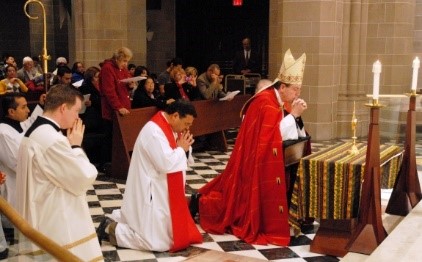
Bishop Young writes that there were two basic sources for the Christian beliefs and creeds;
- The Holy Book i.e. Old Testament.
- Apostolic Traditions.
Moreover, the Bishop Young writes about these two sources and defined that the first is the set of books that were equally used in Jews and the apostles of Jesus , the Jewish Bible -- the Tanakhm, as the New Testament was not yet written and compiled. 16 Moreover, the last source is defined as the Oral Apostolic Traditions which were spreading over the Palestine. Later the same traditions were composed, collected and declared as “Canon” of the New Testament.
Jesus/ Eesa
The name of Eesa as “Iisous” is used in the New Testament for Jesus (Yeshiva). who is also called the Messiah among Christians. 17 Jesus belonged to Nazareth 18 a city near the river of Galilee in the northern Palestine. Although the birth of Christ is said of the eastern Palestine in the city of “Bethlehem”. 19
The calculation of the date of Jesus’s birth was made by a Christian monk called Dionysius about 500 years after Jesus died. Modern scholars believe he was about five or six years out, and they prefer to date the birth of Jesus at about 5 BC.20 There are some contradictions in the historical records about the birth of Jesus . He was born to the Virgin Mary. Hence, he is not considered as a common human by the Christians, but as the son of God.21 Some believe him as the God himself, or the God-Incarnated, who is sent to the world in the face of a human being. 22
In the Bible, opening chapter of Matthew, the birth of Jesus is explained as following manners:
لَمَّا كَانَتْ مَرْيَمُ أُمُّهُ مَخْطُوبَةً لِيُوسُفَ، قَبْلَ أَنْ يَجْتَبِعًا، وَجِدَتْ حُبْلَى مِنَ الرُّوحِ الْقُدُسِ. ١٩ فَيُوسُفُ رَجُلُهَا إِذْ كَانَ بَارًا، وَلَمْ يَشَأْ أَنْ يُشْهرَهَا، أَرَادَ تَخْلِيَتَهَا سِرًّا. 23
His mother Mary was engaged to Joseph, but before they were married, she found out that she was going to have a baby by the Holy Spirit. Joseph was a man who always did what was right, but he did not want to disgrace Mary publicly; so he made plans to break the engagement privately.
This account is found in the Biblical stories only. The original and authentic record is found in the verses of the Holv Ouran which refutes the mentioned account and states that Marvam was never touched bv anv man. Moreover, it also explains the fact that how Jesus was born without a father. The details can be seen in the following verses:
إِذْ قَالَتِ الْمَلَائِكَةُ يَامَرْيَمُ إِنَّ اللَّهَ يُبَشِّرُكِ بِكَلِمَةٍ مِنْهُ اسْمُهُ الْمَسِيحُ عِيسَى ابْنُ مَرْيَمَ وَجِيهًا فِي الدُّنْيَا وَالْآخِرَةِ وَمِنَ الْمُقَرَّبِينَ (٤٥) وَيُكَلِّمُ النَّاسَ فِي الْمَهْدِ وَكَهْلًا وَمِنَ الصَّالِحِينَ (٤٦) قَالَتْ رَبِّ أَنَّى يَكُونُ لِي وَلَدٌ وَلَمْ يَمْسَسْنِي بَشَرٌ قَالَ كَذَلِكِ اللَّهُ يَخْلُقُ مَا يَشَاءُ إِذَا قَضَى أَمْرًا فَإِنَّمَا يَقُولُ لَهُ كُنْ فَيَكُونُ (٤٧) 24
And remember when the angels said, "O Maryam! Allah gives you glad tidings of a Word from Him, whose name is the Messiah, Eisa the son of Maryam - he will be honorable in this world and in the Hereafter, and among the close ones (to Allah)." "He will speak to people while he is in the cradle and in his adulthood, and will be of the devoted ones." She said, "My Lord! How can I bear a child when no man has ever touched me?" He said, "This is how Allah creates whatever He wills; when He wills a thing, He only says to it, 'Be' - and it happens immediately."
The childhood and the youth of Jesus are explained very discretely in the Bible. He recieved his basic education and religious orientation at home. During this, he attended the holy day gathering regularly. 25
The historians have no particular information about the youth of Jesus , the Gospels are silent on this part and refer to this era as the "Lost years of Jesus ". 26
Some say that there`s no information anywhere about the rest of childhood or his years as a carpenter. Because the Gospel writers were very concerned with the teaching and death of Jesus . It seems that they were not writing ‘life story’ books, but books which would present a special ‘view’ of Jesus . The Gospels are not ‘life stories’ in the way that we have biographies of famous or interesting people today. In fact, the main bulk of the material in the Gospels is about the last three years of Jesus’ life.
According to Robert Adam, Christians believe that Jesus is the Messiah 27 (Christ) and through his death and resurrection, humans can be reconciled to God and thereby are offered salvation and the promise of eternal life. He was brought up at Nazareth of Galilee, with Mary his mother, and Joseph, his reputed father. He is supposed to have wrought with him as a carpenter till he was nearly thirty years of age, when he began his public ministry, went about doing good, and not only taught by his doctrine, the will of God for our salvation, but at the same time exhibited in his conduct a perfect pattern of righteousness and holiness of life. He, in a great measure, confined the benefits of his ministry to the Jews. However, after his resurrection, he commissioned the twelve persons whom he had chosen from among his disciples, to be the constant attendants on his person and ministry. These disciples were afterwards called apostles, to go and instruct all nations, in nature and principles of his religion, and to introduce them, by baptism, into that society, of which he was the constituted head. To convince the world of his divine mission and authority, he wrought many miracles. The tendency of these miracles was the same with that of his religion, for they were almost all wrought for the benefit of humanity. Nevertheless, the course of his ministry was interrupted in little more than three years by the Jews, who had all along shown themselves as his enemies, and who, after continued, and till then unheard of insults and indignities offered to his person. At last, ignorantly fulfilled their scriptures, in crucifying the son of God, whereby, though they knew it not, nor meant it so, "a full, perfect, and sufficient sacrifice, oblation, and satisfaction," was made for the sins of humanity. He rose the third day again according to the Scriptures; and after spending forty days in giving further instructions to his disciples, he ascended into heaven, in his human body, and there sitteth at the right hand of God, whence he will come, at the last day, to judge both the quick and the dead. 28
The researchers and historians present different views on this topic. All these stories are full of doubts and against the teachings of Islamic theology that is why not acceptable for the Muslims in any condition. Additionally, the contemporary scholars introduce the history in a more complex manner as in the comparison to the older scholars. Jesus was worried about the misdeeds of the people of Bethlehem and often criticised their actions (at the age of thirty, revelations were sent upon Jesus and prophethood was initiated.).29 God had gifted Jesus with many gifts which included curing the dying sick.
Death and Resurrection
Regarding his death the Bible states:
هَذَا أَخَذْ تُمُوهُ مُسَلَّمًا بِمَشُورَةِ الله المَحْتُومَةِ وَعَلْمِهِ السَّابِقِ، وَبِأَيْدِى أَثَمَةٍ صَلَبْتُمُوهُ وَقَتَلْتُمُوهُ. 30
In accordance with his own plan God had already decided that Jesus would be handed over to you; and you killed him by letting sinful men crucify him.
Ancient History Encyclopedia explains the details of the event as:
"Jesus moved to Jerusalem, Judea, reaching the climax of his public life. Here he engaged in different disputes with his many adversaries. At the same time, some religious authorities were seeking to entrap him into self incrimination by raising controversial topics, mostly of a theological nature. The gospels offer different reasons as to why the Sanhedrin (the Jewish court) was interested in executing Jesus Jesus uses seen as a trouble maker who threatened public harmony. A Roman intervention to restore order, thus breaking the fine balance between Jewish and Roman porcer, did not interest the Sanhedrin. An arresting party finally took Jesus to the Sanhedrin, where he was judged, found guilty of blasphemy, and condemined to death However, the execution order had to be issued by a Roman authority, the Jewish court did not have such power at that time. Therefore, Jesus was brought to the procurator of Rome who ordered Jesus execution. Because Jesus never denied the charges, he should have been convicted and not executed, as the Roman lave required in case of confession for such a penalty. On a hill outside Jerusalem, Jesus tous finally crucified and killed, which was not a Jewish form of pronishment but a common Roman practice. 31
The account mentioned above is based on bogus facts since the Bible has been corrupted by the Christians and the Jews and the explanation mentioned in Ancient History Encyclopedia is also based on the false teachings of Christian literature which is based on altered Bible and history. The authentic narration is mentioned in the Holy Quran as:
وَقَوْلِهِمْ إِنَّا قَتَلْنَا الْمَسِيحَ عِيسَى ابْنَ مَرْيَمَ رَسُولَ اللَّهِ وَمَا قَتَلُوهُ وَمَا صَلَبُوهُ وَلَكِنْ شُبِّهَ لَهُمْ وَإِنَّ الَّذِينَ اخْتَلَفُوا فِيهِ لَفِي شَكٍّ مِنْهُ مَا لَهُمْ بِهِ مِنْ عِلْمٍ إِلَّا اتِّبَاعَ الظَّنِّ وَمَا قَتَلُوهُ يَقِينًا (١٥٧) 32
And because they said, "we have killed the Messiah, Eisa the son of Maryam, the Messenger of Allah" they did not slay him nor did they crucify hum, but a look-alike was created for them, and those who disagree concerning it are in doubt about it, they know nothing of it, except the following of assumptions, and without doubt they did not kill him
As regards whether Jesus was killed or crucified, the Jews and the Christians make false claims which have no basis other than in their own suspicions. The Jews claim to have killed him, ridiculing his assertion that he was God's Messenger. The Christians, on the other hand, claim that he was crucified and buried. But they also claim that he was raised three days later. As for history, it states nothing about Jesus's birth or his end, almost as if nothing happened. When they make their statements, neither the Jews nor the Christians are certain of their truthfulness. Events moved fast, and conflicting reports were made and muddled up. The real truth could not be discovered, except through divine guidance.
The four Gospels which relate the story of the arrest, crucifixion, death, burial, and nise of Jesus were all written after a lengthy lapse of time which also witnessed the persecution of Christianity and the Christians. In such an atmosphere of secrecy, fear and persecution, it is exceedingly difficult to be certain of the truthfulness of the reports that circulated. Many other Gospels were written during this period, but these four were chosen towards the end of the second century and were given official status for reasons that are not entirely above suspicion. 33
Christians consider the resurrection of Jesus to be the cornerstone of their faith and the most important event in history Among Christian beliefs, the death and resurrection of Jesus are two core events on which much of Christian doctrine and theology is based. 34
According to the New Testament, Jesus was crucified, died a physical death, was buried in a tomb, and rose from the dead three days later As the Bible states
الَّذِي أَقَامَهُ اللَّهُ نَاقِضًا أَوْ جَاعَ الْمَوْتِ ، إِذْ لَمْ يَكُنُ مُمْكِنًا أَنْ يُمْسَكَ مِنْهُ . 35
But God raised him from death, setting him free from its power because it was impossible that death should hold him prisnor
يَسُوعُ هَذَا أَقَامَهُ اللهُ، وَنَحْنُ جَمِيعًا شُهُودٌ لِذَلِكَ. 36
God has raised this very Jesus from death, and we are all witnesses to this fact.
The New Testament mentions several resurrection appearances of Jesus on different occasions to his twelve apostles and disciples, including "more than five hundred brethren at once", 37 before Jesus' ascension to heaven. Jesus' death and resurrection are commemorated by Christians in all worship services, with particular emphasis during Holy Week which includes Good Friday and Easter Sunday.
The death and resurrection of Jesus are usually considered the most important events in Christian theology, partly because they demonstrate that Jesus has power over life and death and therefore has the authority and power to give people eternal life 38 but we have already mentioned by the verses of Holy Quran, Al-Nisa (The women) 4: 157-158 that according to Islamic teaching he was not crucified or died physically but Allah raised him towards Himself without death.
Salvation
The Bible states:
٣٨ فَلْيَكُنْ مَعْلُومًا عِنْدَكُمْ أَيُّهَا ٱلرِّجَالُ ٱلْإِخْوَةُ، أَنَّهُ بِهَذَا يُنَادَى لَكُمْ بِغُفْرَانِ ٱلْخَطَايَا، ٣٩ وَبِهَذَا يَتَبَرَّرُ كُلُّ مَنْ يُؤْمِنُ مِنْ كُلِّ مَا لَمْ تَقْدِرُوا أَنْ تَتَبَرَّرُوا مِنْهُ بِنَامُوسِ مُوسَى. 39
“All of you, my fellow Israelites, are to know for sure that it is through Jesus that the message about forgiveness of sins is preached to you; you are to know that everyone who believes in him is set free from all the sins from which the Law of Moses could not set you free.”
The source of the knowledge of salvation is contained in the Bible. While its highest value to the Christians is its adaptation to their wants as sinners, yet the Bible also introduces them into a world of mysterious truths, about God, His Character, His Existence, His Attributes, His Methods of saving a lost race. 40 It is God’s will that all men should be redeemed and that none should be lost. The Gospels also say very clearly that none of the Christians will be saved unless they experience a rebirth through the Holy Spirit, unless they go through repentance and conversion and find faith. And Jesus , who has greater love than any man, speaks clearly of damnation. Even though God is Almighty, and even though it is His express will that all be saved, He does not force His will on human beings. His nature is that of the Lamb, Christ, and the Dove, the Holy Spirit. 41
The Encyclopaedia of World Religions describes it as:
“Salvation is rescued in a religious context. Salvation presupposes that there is a situation from which persons or things need to be saved or rescued. Christianity calls this situation Sin. Some religions save individual human beings. Christianity often saves individual sinners. Other religions save communities. Perhaps the best example of salvation in Judaism is the Exodus, in which the whole people were saved. Some Christians expect the salvation of the entire universe.” 42
Trinity
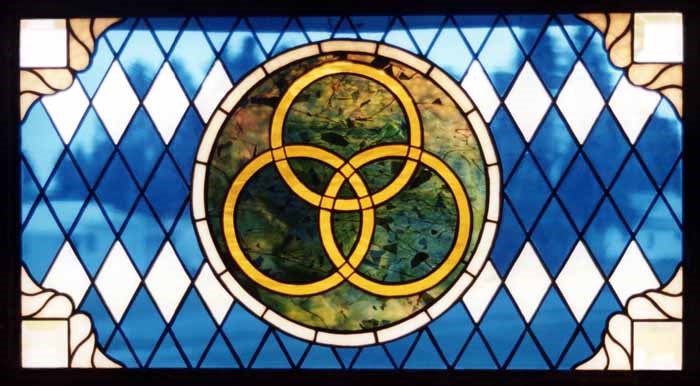
The doctrine of the Holy Trinity is essentially a Christian doctrine. 43 The Bishops of Nicaea confess that they believe in One God, yet they make mention of three Persons, the Father, the Son and the Holy Spirit. When they name the One, they assert the unity of substance; when they mention the Three, they mean a Trinity of Persons. 44 These details are very confusing in reality and even Christian Scholars are unable to explain them. Its further explanation in their own confusing words are as follows:
The Father
God, as Father, was foreshadowed in the Old Testament as:
١٣ كَمَا يَتَرَأَفُ ٱلْأَبُ عَلَى ٱلْبَنِينَ يَتَرَأَفُ ٱلرَّبُّ عَلَى خَائِفِيهِ. 45
“As a father is kind to his children, so the LORD is kind to those who honour him.”
لِأَنِّي صِرْتُ لِإِسْرَائِيلَ أَبًا، وَأَفْرَايِمُ هُوَ بِكْرِي. 46
“I am like a father to Israel, and Ephraim is my oldest son.”
It cannot be said that this is an entirely new concept in the New Testament. However, it is a dominant note there. Jesus took this with a new seriousness and as the distinct characteristic of God. There are other Biblical terms for God, like Shepherd, King, the Highest, Ancient of Days, and Lord of heaven and earth etc. However, for Christians, all ways of thinking about God find their centre and norm in the concept of the Father. This concept of Father, moreover, is filled out with rich meaning by the revealing work of Christ. God is no longer an unknown God. All the elusive attributes like inscrutability or ineffability have been broken through as we see the glory of God in the face of Christ. No wonder then that the phrase, "the love of God," in the apostolic benediction is often used in the fuller form, "the love of God the Father." 47
The Son
The title "son of God" is frequent in the Old Testament. The word "son" was employed among the Semites to signify not only filiation, but the other close connection or intimate relationship. The title "the son of God" is frequently applied to Jesus in the Gospels and Epistles. In the latter, it is everywhere employed as a little formula for expressing his divinity. 48 Jesus is also explicitly and implicitly described as the son of God by himself in Bible (according to Christians) and by various individuals who appear in the New Testament. As applied to Jesus , the term is a reference to his role as the Messiah, the King chosen by God.
The Holy Spirit/Ghost
The Holy Ghost forms an integral part of her teaching on the mystery of the Holy Trinity. The essential points of the dogma may be resumed in the following propositions:
- The Holy Ghost is the Third Person of the Blessed Trinity.
- Though distinct, as a Person, from the father and the son, He is consubstantial with them; being God like them, He possesses with them the same divine essence or nature.
- He proceeds, not by way of generation, but by way of aspiration, from the father and the son together, as from a single principle. 49
Hence, the Trinity doctrine is considered to be one God in three persons. Each of them is said to be without beginning having existed for eternity. Each is said to be Almighty, neither greater nor lesser than the others; each is said to be a whole God in every sense of the word which includes God's attributes, and all are equal in time, position, power and knowledge. This doctrine forms the core and pillar of the Christian faith advocated by almost all the Christian denominations. However, the Trinity doctrine is not divinely inspired, but a human-made dogma coined by the Christians during the last quarter of the 4th century. In fact, it was the outcome of the council of Constantinople in 381 C.E. which agreed to place the Holy Spirit in the same stature as God and Jesus Christ 50 whithout considering the original teachings of Jesus , the prophet of Allah.
Encyclopaedia Britannica describes it in the following manner, that neither the word Trinity nor the explicit doctrine appears in the New Testament. The Father, Son, and Holy Spirit were associated in such New Testament passages as the Great Commission. Thus, the New Testament established the basis for the doctrine of the Trinity. The doctrine developed gradually over several centuries and through many controversies. Initially, both the requirements of monotheism inherited from the Hebrew Scriptures and the implications of the need to interpret the biblical teaching to Greco-Roman religions seemed to demand that the divine in Christ as the Word, or Logos, be construed as subordinate to the Supreme Being. An alternative solution was to interpret Father, Son, and Holy Spirit as three modes of the self-disclosure of the one God but not as distinct within the being of God itself. The first tendency recognised the distinctness among the three, but at the cost of their equality and hence of their unity (subordination); the second came to terms with their unity, but at the price of their distinctness as “persons” (modalism). It was not until the 4th century that the distinctness of the three and their unity were brought together in a single orthodox doctrine of one essence and three persons. 51
Scriptures
Before we get too far into our discussion about the scriptures, it will be helpful to define some terms which are often associated with the Bible-including scripture itself, Orthodox scripture, ecclesiastical scripture (which constituted the Bible in times past), Canonical Scripture, and apocryphal scripture. Each one of these terms has a different meaning and what modern Biblical- Historical Christians mean by the Bible is a highly specific body of writings more accurately called the Canon. That is, when new Biblical-Historical Christians refer to the Bible, we are referring to Canonical Scripture rather than any of the other categories.
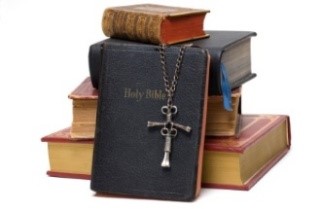
In the Bible and other Christian writings, scripture is used as a shorthand for one of the more accurate terms which will follow in this list of definitions (especially Canonical Scripture). Strictly speaking. However, scripture could refer to all the writings from all the people of all the world.
Orthodox Scripture
Orthodox is a term deriving from the Greek word orthos, meaning right or correct, and Doxa, meaning glory or worship, hence Orthodox scripture is writing that does not conflict with a right or correct glorification or worship of God. More specifically, this category of writings can include fictitious works, commentaries on other works, analogies/parables, historical works, instructional books, etc., so long as those works do not teach anything contrary to an essentially correct view of the God of Christianity.
Interestingly, most of the so-called lost books of the New Testament belong to this category in that many of them are Orthodox (they do not teach anything outside of the set of accepted ancient Christian beliefs). Some of these so-called lost books include many of the various Infancy Gospels, the Acts of Paul and Thecla, the Vision of Paul, the Apocalypse of Peter, the Shepherd of Hermas, etc. These Orthodox scriptures are not included in the New Testament because they are extrapolations and were composed after the New Testament period; it is not the case that these particular books are excluded because they teach things which Christians necessarily oppose. In fact, some of the Traditional churches still use some of the Orthodox scriptures from time to time (such as the Greek Orthodox Church’s use of the Proto Evangelion of James).
As far as specificity is concerned, Orthodox scripture is the most general term a person can use to refer to writings which would be classified as Christian in some way, shape, or form.
Ecclesiastical Scripture
Ecclesiastical derives from the Greek word Ekklesia, which means an assembly. Accordingly, ecclesiastical scripture is that body of writing that is used by a particular assembly (or church/congregation) and may be referred to or taught during the services thereof. That is, ecclesiastical scripture is any writing that you may hear mentioned in a church setting as a means of learning more about the Christian life or Christianity in general. (All of the books referred to as the Apocrypha by Evangelicals are within the classification of ecclesiastical scripture—including Sirach, the Psalms of Solomon, the Odes, Tobit, etc.)
Canonical Scripture
Canonical derives from the Greek word canon, which meant measuring rule or standard. Resultantly, Canonical Scripture is the body of writing, which prescribes the faith in that it acts as a standard of comparison as to what is within the faith and what is not. As may be surmised, Canonical Scripture is the most restrictive collection of scripture in that it has the most limiting definitions—that of special revelation. It suffices to say that Canonical Scripture is that body of writings which is required for a Christian group to assess their doctrines. Put another way, you do not have to possess the Canonical Scriptures to be a Biblical-Historical Christian, but they are required if you want to evaluate your beliefs. That is, if a group is going to align, or realign, itself to reflect authentic Christianity, it must do so with the guidance of Canonical Scripture.
Apocryphal Scripture
Another description which can be applied to scripture is that it is apocryphal, a word deriving from the Greek word apokryphos. Early on, apocryphal referred to something that had been kept secret or hidden, which was a concept that was most strongly associated with the Gnostics, a heretical group which believed that they possessed a “secret knowledge” which had either been passed down to them alone or had been revealed to them alone. Early Christians, however, rejected Gnosticism by affirming (1) that what the 12 Apostles had been preaching they had codified in the written records the Christians now possessed, and (2) that the result of the 12 Apostles’ preaching (the tradition which resulted from their instruction) was not at odds with nor necessary for understanding the substantial message of Scripture.
The association of hidden things with Gnosticism seems to have had the effect of making Christians fairly suspicious of later revealed, idiosyncratic teachings. This being the case, it is not surprising that, by the fourth century, apocryphal had become a pejorative term within Christianity, which came to signify that something was untrue or unreliable. In particular, Jerome applied the term apocryphal to many books which had theretofore been accepted as ecclesiastical scripture, including the Wisdom of Solomon, Sirach, Judith, and Tobit—since he could not find sufficient evidence for them in the Hebrew. Later, at the time of the Protestant Reformation, Jerome’s assessment of those books and his terminology (calling them apocryphal) became a critical aspect of the Protestant affirmation that these works are not Canonical Scripture.
Nonetheless, even though we agree with Jerome (and a host of the early church fathers) in saying that such works are not Canonical Scripture, it should be noted that using the term The Apocrypha to describe them is somewhat imprecise and idiosyncratic. That is, most other early church fathers did not call these non-Canonical books apocryphal, but instead would employ some other terminology—rejected yet used by ecclesiastical authors, instructors, ecclesiastical, not placed in the ark—and thus Jerome used terminology that was out of place in his time. This being the case, the Protestant who uses the term, the Apocrypha must understand that such phrasing is vague and perhaps overly derogatory—what we are referring to is probably best referred to as ecclesiastical scripture. 52
So Christianity, like other religions, has adherents whose beliefs and biblical interpretations vary. Christianity regards the biblical canon, the Old Testament and the New Testament, as the inspired word of God. The traditional view of inspiration is that God worked through human authors so that what they produced was what God wished to communicate. The Greek word referring to inspiration in 2 Timothy is theopneustos, which literally means "God-breathed". 53 As the Bible states:
١٦ كُلُّ ٱلْكِتَابِ هُوَ مُوحًى بِهِ مِنَ ٱللهِ، وَنَافِعٌ لِلتَّعْلِيمِ وَٱلتَّوْبِيخِ، لِلتَّقْوِيمِ وَٱلتَّأْدِيبِ ٱلَّذِي فِي ٱلْبِرِّ. 54
All Scripture is inspired by God and is useful (a) for teaching the truth, rebuking error, correcting faults, and giving instruction for right living.
Some believe that divine inspiration makes our modern Bibles inerrant. Others claim inerrancy of the Bible in its original manuscripts, although none of those are existing. Still, others maintain that only a particular translation is inerrant, such as the King James Version. Another closely related view is Biblical infallibility or limited inerrancy, which affirms that the Bible is free of error as a guide to salvation, but may include errors on matters such as history, geography or science.
The books of the Bible accepted by the Orthodox, Catholic and Protestant churches vary somewhat, with Jews accepting only the Hebrew Bible as canonical; there is, however, substantial overlap. These variations are a reflection of the range of traditions, and of the councils that have convened on the subject. Every version of the Old Testament always includes the books of the Tanakh, the canon of the Hebrew Bible. The Catholic and Orthodox canons, in addition to the Tanakh, also include the Deuterocanonical Books as part of the Old Testament. These books appear in the Septuagint, 55 but are regarded by Protestants to be apocryphal. 56 However, they are considered to be important historical documents which help to inform the understanding of words, grammar and syntax used in the historical period of their conception. Some versions of the Bible include a separate Apocrypha section between the Old Testament and the New Testament. The New Testament, originally written in Koine Greek (the common dialect), contains 27 books which are agreed upon by all churches.
Modern scholarship has raised many issues with the Bible. While the authorised King James Version is acceptable for majority because of its beautiful English prose, in fact, it was translated from the Erasmus Greek Bible, which in turn "was based on a single 12th Century manuscript that is one of the worst manuscripts we have available to us", said by Ehrman.57 Many scholarships in the past several hundred years have gone into comparing different manuscripts to reconstruct the original text. Another issue is that several books are considered to be forgeries. An example can be seen below:
١١ لِتَتَعَلَّمِ ٱلْمَرْأَةُ بِسُكُوتٍ فِي كُلِّ خُضُوعٍ. ١٢ وَلَكِنْ لَسْتُ آذَنُ لِلْمَرْأَةِ أَنْ تُعَلِّمَ وَلَا تَتَسَلَّطَ عَلَى ٱلرَّجُلِ، بَلْ تَكُونُ فِي سُكُوتٍ. 58
Women should learn in silence and all humility. I do not allow them to teach or to have authority over men; they must keep quiet.
The injuction that women should learn in silence and all humility is thought by many to be a forgery by a follower of Paul, a similar phrase in 1 Corinthians 14: 34-35, which is believed to be by Paul, appears in different places in different manuscripts and is thought to originally be a margin note by a copyist. 59
A final issue with the Bible is the way in which books were selected for inclusion in the New Testament. Other Gospels have now been recovered, such as those found near Nag Hammadi in 1945, and while some of these texts are quite different from what Christians have been used to, it should be understood that some of this newly recovered Gospel material is probably contemporaneous with, or even earlier than, the New Testament Gospels. The core of the Gospel of Thomas, in particular, may date from as early as 50 A.D (although some major scholars contest this early dating). 60 And if so would provide an insight into the earliest gospel texts that underlie the canonical Gospels, texts that are mentioned in Luke 1: 1–2. The Gospel of Thomas contains much that is familiar from the canonical Gospels—verse 113. For example ("The Father's Kingdom is spread out upon the earth, but people do not see it"), is reminiscent of Luke 17:20–21 61 —and the Gospel of John, with a terminology and approach that is suggestive of what was later termed Gnosticism, has recently been seen as a possible response to the Gospel of Thomas, a text that is commonly labelled proto-Gnostic. Scholarship, then, is currently exploring the relationship in the Early Church between mystical speculation and experience on the one hand and the search for church order on the other, by analysing new-found texts, by subjecting canonical texts to further scrutiny, and by an examination of the passage of New Testament texts to official status.
New Testament Canons 62
| Books | Protestant Tradition | Roman Catholic Tradition | Eastern Orthodox Tradition | Armenian Apostolic Tradition | Coptic Orthodox Tradition | Orthodox Tewahedo Traditions | Syriac Christian Traditions |
| Canonical Gospels | |||||||
| Matthew | Yes | Yes | Yes | Yes | Yes | Yes | Yes |
| Mark | Yes | Yes | Yes | Yes | Yes | Yes | Yes |
| Luke | Yes | Yes | Yes | Yes | Yes | Yes | Yes |
| John | Yes | Yes | Yes | Yes | Yes | Yes | Yes |
| Apostolic History | |||||||
| Acts | Yes | Yes | Yes | Yes | Yes | Yes | Yes |
| Acts of Paul and Thecla | No | No | No | No/Early tradition | No | No | No/Early tradition |
| General Epistles | |||||||
| James | Yes | Yes | Yes | Yes | Yes | Yes | Yes |
| 1 Peter | Yes | Yes | Yes | Yes | Yes | Yes | Yes |
| 2 Peter | Yes | Yes | Yes | Yes | Yes | Yes | Yes |
| 1 John/N 4 | Yes | Yes | Yes | Yes | Yes | Yes | Yes |
| 2 John | Yes | Yes | Yes | Yes | Yes | Yes | Yes |
| 3 John | Yes | Yes | Yes | Yes | Yes | Yes | Yes |
| Jude | Yes | Yes | Yes | Yes | Yes | Yes | Yes |
| Pauline Epistles | |||||||
| Romans | Yes | Yes | Yes | Yes | Yes | Yes | Yes |
| 1 Corinthians | Yes | Yes | Yes | Yes | Yes | Yes | Yes |
| 2 Corinthians | Yes | Yes | Yes | Yes | Yes | Yes | Yes |
| Corinthians to Paul and 3 Corinthians | No | No | No | No − inc. in some mss. | No | No | No / Early tradition |
| Galatians | Yes | Yes | Yes | Yes | Yes | Yes | Yes |
| Ephesians | Yes | Yes | Yes | Yes | Yes | Yes | Yes |
| Philippians | Yes | Yes | Yes | Yes | Yes | Yes | Yes |
| Colossians | Yes | Yes | Yes | Yes | Yes | Yes | Yes |
| Laodiceans | No − inc. in some eds. | No − inc. in some mss. | No | No | No | No | No |
| 1 Thessalonians | Yes | Yes | Yes | Yes | Yes | Yes | Yes |
| 2 Thessalonians | Yes | Yes | Yes | Yes | Yes | Yes | Yes |
| Hebrews | Yes | Yes | Yes | Yes | Yes | Yes | Yes |
| 1 Timothy | Yes | Yes | Yes | Yes | Yes | Yes | Yes |
| 2 Timothy | Yes | Yes | Yes | Yes | Yes | Yes | Yes |
| Titus | Yes | Yes | Yes | Yes | Yes | Yes | Yes |
| Philemon | Yes | Yes | Yes | Yes | Yes | Yes | Yes |
| Apocalypse | |||||||
| Revelation | Yes | Yes | Yes | Yes | Yes | Yes | Yes |
| Apostolic Fathers and Church Orders | |||||||
| 1 Clement | No / Codices Alexandrinus and Hierosolymitanus | ||||||
| 2 Clement | No / Codices Alexandrinus and Hierosolymitanus | ||||||
| Shepherd of Hermas | No / Codex Sinaiticus | ||||||
| Epistle of Barnabas | No / Codices Hierosolymitanus and Sinaiticus | ||||||
| Didache | No / Codex Hierosolymitanus | ||||||
| Serata Seyon / Sinodos | No | No | No | No | No | Yes / Broader canon | No |
| Te'ezaz / Sinodos | No | No | No | No | No | Yes / Broader canon | No |
| Gessew / Sinodos | No | No | No | No | No | Yes / Broader canon | No |
| Abtelis / Sinodos | No | No | No | No | No | Yes / Broader canon | No |
| Book of the Covenant 1 / Mashafa Kidan | No | No | No | No | No | Yes / Broader canon | No |
| Book of the Covenant 2 / Mashaf Kidan | No | No | No | No | No | Yes / Broader canon | No |
| Ethiopic Clement /Qalementos | No | No | No | No | No | Yes / Broader canon | No |
| Ethiopic Didescalia / Didesqelya | No | No | No | No | No | Yes / Broader canon | No |
Worship
Justin Martyr described the 2nd-century Christian liturgy in his First Apology (c. 150) to Emperor Antoninus Pius, and his description remains relevant to the core structure of Christian liturgical worship:
“And on the day called Sunday, all who live in cities or in the country gather together to one place, and the memoirs of the apostles or the writings of the prophets are read, as long as time permits; then, when the reader has ceased, the president verbally instructs, and exhorts to the imitation of these good things. Then we all rise together and pray, and, as we have before said, when our prayer is ended, bread and wine and water are brought, and the president in like manner offers prayers and thanksgivings, according to his ability, and the people assent, saying Amen; and there is a distribution to each, and a participation of that over which thanks have been given, and to those who are absent a portion is sent by the deacons. And they who are well to do, and willing, give what each thinks fit; and what is collected is deposited with the president, who succours the orphans and widows and those who, through sickness or any other cause, are in want, and those who are in bonds and the strangers sojourning among us, and in a word takes care of all who are in need.” 63
Thus, as Justin described, Christians assemble for communal worship on Sunday, the day of the resurrection, though other liturgical practices often occur outside this setting. Scripture readings are drawn from the Old and New Testaments, but especially the gospel accounts. Often these are arranged on an annual cycle, using a book called a Lectionary. Instruction is given based on these readings, called a sermon, or homily. There are a variety of congregational prayers, including thanksgiving, confession, and intercession, which occur throughout the service and take a variety of forms including recited, responsive, silent, or sung. The Lord's Prayer, or father, is regularly prayed.
Some groups depart from this traditional liturgical structure. A division is often made between "High" church services, characterised by greater solemnity and ritual, and "Low" services, but even within these two categories there is great diversity in forms of worship. Seventh-day Adventists meet on Saturday, while others do not meet on a weekly basis. Charismatic or Pentecostal congregations may spontaneously feel led by the Holy Spirit to action rather than follow a formal order of service, including spontaneous prayer. Quakers sit quietly until moved by the Holy Spirit to speak.
Some evangelical services resemble concerts with rock and pop music, dancing, and use of multimedia. For groups which do not recognise priesthood distinct from ordinary believers, the services are led by a minister, preacher, or pastor. Still, others may lack any formal leaders, either in principle or by local necessity. Some churches use only a cappella music, either on principle (for example, many Churches of Christ object to the use of instruments in worship) or by tradition (as in Orthodoxy).
Nearly all forms of churchmanship celebrate the Eucharist (Holy Communion), which consists of a consecrated meal. It is reenacted in accordance with Jesus' instruction at the Last Supper that his followers do in remembrance of him as when he gave his disciples bread, saying, "This is my body", and gave them wine saying, "This is my blood". Some Christian denominations practice closed communion. They offer communion to those who are already united in that denomination or sometimes individual church. Catholics restrict participation to their members who are not in a state of mortal sin. Most other churches practice open communion since they view communion as a means to unity, rather than an end, and invite all believing Christians to participate.
Worship can be varied for special events like baptisms or weddings in the service or significant feast days. In the early church, Christians and those yet to complete initiation would separate for the Eucharistic part of the worship. In many churches today, adults and children will separate for all or some of the service to receive age-appropriate teaching. Such children's worship is often called Sunday school or Sabbath school (Sunday schools are often held before rather than during services).
Prayer
According to the Bible, Jesus' teaching about prayer in the sermon of the Mount displays a distinct lack of interest in the external aspects of prayer which is not acceptable by Islamic point of view. A concern with the techniques of prayer is condemned as 'pagan', and instead a simple trust in God's fatherly goodness is encouraged:
(5) وَمَتَى صَلَّيْتَ فَلا تَكُنْ كَالْمُرَائِينَ، فَإِنَّهُمْ يُحِبُّونَ أَنْ يُصَلُّوا قَائِمِينَ فِي ٱلْمَجَامِعِ وَفِي زَوَايَا ٱلشَّوَارِعِ لِكَيْ يَظْهَرُوا لِلنَّاسِ. ٱلْحَقَّ أَقُولُ لَكُمْ: إِنَّهُمْ قَدِ ٱسْتَوْفَوْا أَجْرَهُمْ (6) وَأَمَّا أَنْتَ فَمَتَى صَلَّيْتَ فَٱدْخُلْ إِلَى مِخْدَعِكَ وَأَغْلِقْ بَابَكَ وَصَلِّ إِلَى أَبِيكَ ٱلَّذِي فِي ٱلْخَفَاءِ، فَأَبُوكَ ٱلَّذِي يَرَى فِي ٱلْخَفَاءِ يُجَازِيكَ عَلَانِيَةً (7) وَحِينَمَا تُصَلُّونَ لَا تُكَرِّرُوا ٱلْكَلَامَ بَاطِلًا كَٱلْأُمَمِ، فَإِنَّهُمْ يَظُنُّونَ أَنَّهُ بِكَثْرَةِ كَلَامِهِمْ يُسْتَجَابُ لَهُمْ (8) فَلَا تَتَشَبَّهُوا بِهِمْ، لِأَنَّ أَبَاكُمْ يَعْلَمُ مَا تَحْتَاجُونَ إِلَيْهِ قَبْلَ أَنْ تَسْأَلُوهُ (9) فَصَلُّوا أَنْتُمْ هَكَذَا: أَبَانَا ٱلَّذِي فِي ٱلسَّمَاوَاتِ، لِيَتَقَدَّسِ ٱسْمُكَ (10) لِيَأْتِ مَلَكُوتُكَ. لِتَكُنْ مَشِيئَتُكَ كَمَا فِي ٱلسَّمَاءِ كَذَلِكَ عَلَى ٱلْأَرْضِ (11) خُبْزَنَا كَفَافَنَا أَعْطِنَا ٱلْيَوْمَ (12) وَٱغْفِرْ لَنَا ذُنُوبَنَا كَمَا نَغْفِرُ نَحْنُ أَيْضًا لِلْمُذْنِبِينَ إِلَيْنَا (13) وَلَا تُدْخِلْنَا فِي تَجْرِبَةٍ، لَكِنْ نَجِّنَا مِنَ ٱلشِّرِّيرِ. لِأَنَّ لَكَ ٱلْمُلْكَ وَٱلْقُوَّةَ وَٱلْمَجْدَ إِلَى ٱلْأَبَدِ. آمِينَ (14) فَإِنَّهُ إِنْ غَفَرْتُمْ لِلنَّاسِ زَلَّاتِهِمْ يَغْفِرْ لَكُمْ أَيْضًا أَبُوكُمُ ٱلسَّمَاوِيُّ (15) وَإِنْ لَمْ تَغْفِرُوا لِلنَّاسِ زَلَّاتِهِمْ لَا يَغْفِرْ لَكُمْ أَبُوكُمْ أَيْضًا زَلَّاتِكُمْ. 64
When you pray, do not be like the hypocrites! They love to stand up and pray in the houses of worship and on the street corners, so that everyone will see them. I assure you, they have already been paid in full. But when you pray, go to your room, close the door, and pray to your Father, who is unseen. And your Father, who sees what you do in private, will reward you. When you pray, do not use a lot of meaningless words, as the pagans do, who think that their gods will hear them because their prayers are long. Do not be like them. Your Father already knows what you need before you ask him. This, then, is how you should pray: 'Our Father in heaven: May your holy name be honoured; may your Kingdom come; may your will be done on earth as it is in heaven. Give us today the food we need. Forgive us the wrongs we have done, as we forgive the wrongs that others have done to us. Do not bring us to hard testing, but keep us safe from the Evil One." "If you forgive others the wrongs they have done to you, your Father in heaven will also forgive you. But if you do not forgive others, then your Father will not forgive the wrongs you have done.
Elsewhere in the New Testament, this same freedom of access to God is emphasised in the following manner:
لَا تَهْتَهُوا بِشَيْءٍ ، بَلْ فِي كُلِّ شَيْءٍ بِالصَّلَاةِ وَالدُّعَاءِ مَعَ الشُّكْرِ، لِتُعْلَمُ طِلْبَاتُكُمْ لَدَى اللهِ . 65
Don't worry about anything, but in all your prayers ask God for what you need, always asking him with a thankful heart.
This certain position should be understood in light of Christian belief in the unique relationship between the believer and Jesus through the indwelling of the Holy Spirit.
In subsequent Christian traditions, certain physical gestures are emphasised, including medieval gestures such as genuflection 66 or making the sign of the cross. Kneeling, bowing and prostrations are often practised in more traditional branches of Christianity. Frequently in Western Christianity, the hands are placed palms together and forward as in the feudal commendation ceremony. At other times the older Oran posture 67 may be used, with palms up and elbows in.
Intercessory prayer is a prayer offered for the benefit of other people. There are many intercessory prayers recorded in the Bible, including prayers of the Saint Peter on behalf of sick persons:
فَأَخْرَجَ بُطْرُسُ الْجَمِيعَ خَارِجًا، وَجَثَا عَلَى رُكْبَتَيْهِ وَصَلَّى. ثُمَّ الْتَفَتَ إِلَى الْجَسَدِ وَقَالَ: يَا طَابِيثَا قُومِي. فَفَتَحَتْ عَيْنَيْهَا، وَلَمَّا أَبْصَرَتْ بُطْرُسَ جَلَسَتْ. 68
Peter put them all out of the room, and knelt down and prayed; then he turned to the body and said, "Tabitha, get up!" She opened her eyes, and when she saw Peter, she sat up.
In the Epistle of James, no distinction is made between the intercessory prayer offered by ordinary believers and the prominent Old Testament Elijah. 69 The effectiveness of prayer in Christianity derives from the power of God rather than the status of the one praying.
*The ancient church, in both Eastern Christianity and Western Christianity, developed a tradition of asking for the intercession of (deceased) saints, and this remains the practice of most Eastern Orthodox, Oriental Orthodox, Roman Catholic, and some Anglican churches. Churches of the Protestant Reformation, however, rejected prayer to the saints, largely on the basis of the sole mediatorship of Christ. 70 The reformer Huldrych Zwingli. 71 admitted that he had offered prayers to the saints unti his reading of the Bible convinced him that his was idolatrous. 72
Sacraments (Practices)
Instead of using the word ‘practice’ Christianity uses the term of ‘Sacraments’. It is derived from the Latin word Sacramentum, which was used to translate the Greek word for mystery. They are visible signs permanently instituted by Jesus Christ and are considered channels of grace and thus become a means of sanctity. Jesus Christ instituted the following seven sacraments which are accepted more or less in different sects of Christianity: Baptism, Confirmation, the Holy Eucharist, Penance, Extreme Unction, Holy Orders, and Matrimony. 73 Their brief explanations are as follows:
Baptism
This is the most obvious ritual. This is a type of a particular bath which is done upon the entrance into the circle of Christianity. Nobody can be a Christian without performing this ritual. The Bible says:
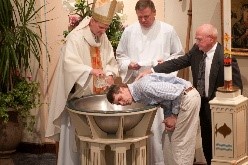
١٩ فَٱذْهَبُوا وَتَلْمِذُوا جَمِيعَ ٱلْأُمَمِ وَعَمِّدُوهُمْ بِٱسْمِ ٱلْآبِ وَٱلِٱبْنِ وَٱلرُّوحِ ٱلْقُدُسِ. 74
“Go, then, to all peoples everywhere and make them my disciples: baptise them in the name of the Father, the Son, and the Holy Spirit.”
The canonical Gospels report that Jesus was himself baptised:
١٦ فَلَمَّا ٱعْتَمَدَ يَسُوعُ صَعِدَ لِلْوَقْتِ مِنَ ٱلْمَاءِ، وَإِذَا ٱلسَّمَاوَاتُ قَدِ ٱنْفَتَحَتْ لَهُ، فَرَأَى رُوحَ ٱللهِ نَازِلًا مِثْلَ حَمَامَةٍ وَآتِيًا عَلَيْهِ. 75
And when Jesus had been baptised, just as he came up from the water, suddenly the heavens were opened to him, and he saw the Spirit of God descending like a dove and alighting on him.
٩ وَفِي تِلْكَ ٱلْأَيَّامِ جَاءَ يَسُوعُ مِنْ نَاصِرَةِ ٱلْجَلِيلِ وَٱعْتَمَدَ مِنْ يُوحَنَّا فِي ٱلْأُرْدُنِّ. ١٠ وَلِلْوَقْتِ وَهُوَ صَاعِدٌ مِنَ ٱلْمَاءِ رَأَى ٱلسَّمَاوَاتِ قَدِ ٱنْشَقَّتْ، وَٱلرُّوحَ مِثْلَ حَمَامَةٍ نَازِلًا عَلَيْهِ. 76
Not long afterwards Jesus came from Nazareth in the province of Galilee, and was baptised by John in the Jordan. 10 As soon as Jesus came up out of the water, he saw heaven opening and the Spirit coming down on him like a dove.
٢١ وَلَمَّا ٱعْتَمَدَ جَمِيعُ ٱلشَّعْبِ ٱعْتَمَدَ يَسُوعُ أَيْضًا. وَإِذْ كَانَ يُصَلِّي ٱنْفَتَحَتِ ٱلسَّمَاءُ. 77
After all the people had been baptised, Jesus also was baptised. While he was praying, heaven was opened.
The outward and visible sign of Baptism is water, wherein the person is baptised, and the inward and spiritual grace is said to be a death unto sin and a new birth unto righteousness; for being by nature born in sin and the children of wrath. According to Christians, by Baptism, they make their children, the children of grace. Repentance, whereby they forsake sin, and faith, whereby they steadfastly believe in the promises of God made to them in the sacrament, are stated by the Church, in her catechism, to be required of all persons who are to be baptised. 78
Stephenson explains that Baptism was the symbol of admission to this new community of believers. The main idea was consecration. This like all the sacred washings of antiquity had two aspects, purging from a sinful state and purification into a holy state in the future. Christian baptism placed special stress upon the latter aspect. This was indicated by the added expression "into Christ." This was the only requirement for membership. Once baptised in the name of Christ the Christian found himself a full member in good standing of a brotherhood whose “fellowship" was based on love and which far surpassed anything he had ever dreamed. The watchword of this society was not individual, but community interest. The surrendering of goods into the common treasury was only a part of that surrendering of self into the “body of Christ." It was a part of the first surrendering of self into the “body of Christ." It was a part of the first outpouring of brotherly love among the followers of the risen Jesus and must be looked upon as a very natural expression of that intensity of feeling if not a proper interpretation of the acts and intents of the Master himself. This love transfigured all human relations and raised them to a new power and sweetness. 79
Confirmation
In Christianity, Confirmation is seen as the sealing of the covenant created in Holy Baptism. In Confirmation, the Holy Ghost is received in all the plenitude of His graces. This Sacrament, conferred on baptised people strengthens them in the profession of the Christian faith. Though the Lord had given the Holy Ghost to His Apostles, nevertheless they remained fearful until Pentecost-day, when the Holy Ghost with the plenitude of His graces came upon them. Then they were confirmed, strengthened in their faith and feared not to face the enemies of Christ and to preach the gospel of salvation. 80
The Eucharist
It is the name given to the Blessed Sacrament of the Altar in its twofold aspect of sacrament and Sacrifice of Mass, and in which Jesus is truly present under the appearances of bread and wine.
Other titles are used, such as "Lord's Supper" (Coena Domini), "Table of the Lord" (Mensa Domini), the "Lord's Body" (Corpus Domini), and the "Holy of Holies" (Sanctissimum), to which may be added the following expressions, and somewhat altered from their primitive meaning:"Agape" (Love-Feast), "Eulogia" (Blessing), "Breaking of Bread", "Synaxis" (Assembly), etc.; but the ancient title "Eucharistia" appearing in writers as early as Ignatius, Justin, and Irenaeus, has taken precedence in the technical terminology of the Church and her theologians. The expression "Blessed Sacrament of the Altar", introduced by Augustine, is at the present day almost entirely restricted to catechetical and popular treatises.
The Church honours the Eucharist as one of its most exalted mysteries since for sublimity and incomprehensibility it yields in nothing to the allied mysteries of the Trinity and Incarnation. These three mysteries constitute a confusing triad. It causes the essential characteristic of Christianity, as a religion of mysteries far transcending the capabilities of reason, 81 it shows that this religion is not in its original form and has been amended by its followers because God is perfect and does not have any lacking in His message.
Penance
Through the Sacrament of Penance the sins committed after Baptism are forgiven. The repentant Christian confesses his sins sincerely to a duly authorised priest, who hears the sins, gives an admonition and if he considers the penitent rightly disposed of (i.e., contrite and determined to avoid the sin in future and to make satisfaction for the sins of injustice), gives absolution. The priest absolves in place of God, whose representative he is. The power to absolve from sins and the right to refuse absolution, Jesus gave to His apostles and their rightful successors. Duly authorised priests have this double power. 82
Extreme Unction
With holy oil consecrated by the bishops, the priest anoints the sick Christian in the form of a cross on the five senses: eyes, ears, nose, mouth, hands and feet. In the case of urgent need, the dying Christian is anointed under one form; the priest anoints the forehead of the dying.
St. James, one of the twelve apostles, writes: “Is any man sick among you? Let him bring in the priests of the Church, and let them pray over him, anointing him with oil in the name of the Lord. Moreover, the prayer of faith shall save the sick man: and the Lord shall raise him up: and if he be in sins, they shall be forgiven him.''
The Holy order
This ritual is done when a person is made the Bishop of Church. In this ritual, the teacher or the Bishop reads some verses and commands from the Bible and places their hands upon the head. Historically, the word "order" designated an established civil body or corporation with a hierarchy. The word "holy" refers to the Church. In context, therefore, a sacred order is set apart for ministry in the Church. Other positions, such as the pope, the patriarch, cardinal, monsignor, archbishop, archimandrite, archpriest, proto-presbyter, hieromonk, proto-deacon and archdeacon, are not religious orders but particular ministry positions.
The so-called Apostolic Constitutions, compiled about the year 400 C.E states: "The bishop gives a blessing and does not receive it; he imposes hands, ordains, and offers a sacrifice, he receives a blessing from the bishops, but never from priests. The bishop deposes every cleric that deserves deposition, except a bishop, for this he cannot do alone. The presbyter (priest) gives a blessing and does not receive it. He receives a blessing from the bishop and a fellow-priest, in like manner he blesses his fellow-priest; he imposes hands, but does not ordain; he deposes no one, but excommunicates those under him, if they deserve this punishment. The deacon does not give a blessing, but receives it from the bishop and the presbyter; he baptises not, he offers not; but when the bishop or the presbyter offer, he distributes (communion) to the people, not indeed as a priest, but as a minister of the priest.'' 83
Matrimony
Marriage in Christianity is a part of living the life of obedience to the will of God. Every young man and woman should think of marriage seriously upon reaching the age of 18-20, whether it is desired and planned remotely or immediately. A good Christian takes marriage as a sacred institution established by God at the beginning of creation and hallowed by Christ in the new dispensation of his death and resurrection.
A girl who has faith, prays earnestly for a happy marriage. She preserves her virginity in humble obedience to the will of God and trusts in the loving providence of God as the response to fervent prayer. 84 As of 2015, many Christian denominations regard marriage as a sacrament, sacred institution, or covenant, but this was not always the case before the 1184 Council of Verona officially recognised marriage as a sacrament. 85
Concept of fasting
According to Christianity, Jesus did not appoint any particular days or times of fasting for his followers, hence fasting is optional for them. However, whenever they fast, they should do this to please God and not like Hypocrites to get glory from men.
Some Christians refrain from eating meat on Friday as this is the day in which Jesus was crucified. Others abstain from eating certain foods during ‘lent’, the Forty weekdays before Easter, the festival of the resurrection of Christ. The Bible did not command these customs, but it was commanded that we refrain from doing and saying and doing all evil things. 86
It is impossible to be obedient to Christ and at the same to give unlimited indulgence to our physical desires. To fast is to prove that our soul can rule the body. It demonstrates that ‘man shall not live by bread alone, but by every word that comes out from the mouth of the Lord’. Fasting reminds that nourishing the soul is more important to our eternal welfare than feeding only the body. In the Christian sense, fasting is an expression of sorrow for personal sinfulness and unworthiness.
It is important to remember that fasting must go hand in hand with sexual abstinence. Married people should not forget that fasting is pleasing to God and spiritually profitable only when self-denial accompanies it as regards to marital intercourse. Hence every fast is a day of sexual abstinence. 87
Alms Giving
Jesus did not appoint a fixed portion of one’s income or capital which should be given by Christians to the work of God and the needy. However, he taught that all we have belongs to God, and we should use our money, be little or much, as God directs. Christians, therefore, express their gratitude to God by willingly of what He has entrusted them to support their pastors and the work of their churches, helping the poor and the sick, and to send the Good News of Christ to people who have not heard it. Jesus said his followers should give generously to please God, and many Christians give one-tenth of their income to God, but not to get honour and praise from men. 88
The Book of Common Prayer in the Anglican tradition is a guide which provides a set order for church services, containing set prayers, scripture readings, and hymns or sung Psalms.
Major Sects
The three important divisions of Christianity are Roman Catholicism, Eastern Orthodoxy, and Protestantism. Other Christian groups do not fit neatly into one of these primary categories. The Nicene Creed is accepted as authoritative by the Roman Catholic, Eastern Orthodox, Anglican, and major Protestant churches.
There is a diversity of doctrines and practices among groups calling themselves Christian. In addition to the Lutheran and Reformed (or Calvinist) branches of the Reformation, there is Anglicanism after the English Reformation. The Anabaptist tradition was widely ostracised by the other Protestant parties at the time, but has achieved a measure of affirmation in more recent history. Adventist, Baptist, Methodist, Pentecostal and other Protestant confessions arose in the following centuries.
As well as these new divisions, there were many diverse Christian communities with wildly different Christologies, eschatologies, soteriologies, and cosmologies that existed alongside the "Early Church" which is itself a projected concept to indicate which communities were "proto-orthodox", in that their views would become dominate. In many ways, the first three centuries of Christianity were significantly more diverse than the modern Church. 89 Let us discuss major of them briefly:
Catholic
The Holy Catholic Apostolic Roman Church, more commonly known as the Roman Catholic Church, is that great branch of the Christian church which acknowledges the pope, or the bishop of Rome, as the visible head of the church. The Roman Catholic Church proudly identifies itself with the whole Church of Christ. It asserts its exclusive right to the title "Catholic" and treats all other Christians as schismatic and heretics.
It is distinguished from the Greek Church mainly by the claims of the papacy which the Eastern Church rejects, and the question of the procession of the Holy Spirit. It is distinguished from all other Western churches by holding the following doctrines and practices. Insufficiency of the Holy Scriptures as a rule of faith and practice; equal authority of tradition with the written word of God in the Bible; papal supremacy and infallibility, as the source and centre, so far as the interpretation of the divine will to the world is concerned with all matters of faith and morals. The worship of the Roman Catholic Church is an elaborate ritual centering about the sacrifice of the mass. All the fine arts are drawn into the church's service: cathedrals and altars, candles and crucifixes, madonnas and pictures, priestly chant and operatic music. Relics and rosaries, incense and chrism, solemn processions and genuflections, tinkling of bells and a sprinkling of holy water, Pater Nosters and Ave Marias all combine to charm the senses. The Roman Liturgy is the same all over the world and is in Latin except in the Uniat churches. The sermon, which, however, holds a very subordinate place in the Catholic service, and the reading of the Scriptures is in the vernacular.
The system of Catholic doctrine is contained in the ecumenical creeds (the Apostles', Nicene with the filioque, and the Athanasian), the decisions of the general councils (19 in number) particularly the Tridentine and Vatican decrees, the Tridentine Profession, the Catechisms and the ex-cathedra, utterances of the popes. Worship and ceremonies are embodied in the liturgical standards, the Roman Missal and the Roman Breviary. 90 The Latin Church, the Eastern Catholic Churches, as well as institutes such as mendicant orders and enclosed monastic orders, reflect a variety of theological and spiritual emphases in the Church. 91
Orthodox
The Greek Church or Eastern Orthodox Church described officially as "The Holy Orthodox Catholic Apostolic Eastern Church" represents that portion of the Christian church which prevailed in the countries once comprised of the Byzantine Empire and the countries converted to Christianity by missionaries of it. In the latter part of the ninth century differences between the Eastern and Western Churches developed over the question of papal supremacy and the doctrine of the "filioque" and culminated in 1054 in the complete cleavage between the Greek and Roman Churches. 92
The Greek Church, or, as it calls itself, the Holy, Orthodox, Catholic, Apostolic, Oriental Church, has a venerable if not an eventful history. It has no reformation. It has no middle ages; it has no Renaissance. It has given birth to no great universities and schools of learning; it has no Protestantism. 93
The Greek Church, as a separate entity, dates back to the eleventh century. It refused to obey the Church. It does not acknowledge the authority nor heed the voice of the shepherd, whom Jesus commissioned to feed the lambs and the sheep according to Christian theology. Not all Greeks belong to the Greek Church. Many of them are genuine and devout members of the Catholic Church. These we call United Greeks, or simply Catholics. Those belonging to the Greek Church are called schismatics, because they separated from the true Church. 94
Protestants
There is a fact in existence among civilized nations, imperative on account of the nature of the things which it affects—a fact of transcendent importance, on account of the number, variety, and consequence of its influences — a fact extremely interesting, because it is connected with the principal events of modern history: that fact is Protestantism. 95
Protestantism must be understood, first and foremost, by the contrast which it offers to Catholicism, and here, there is a double direction. First is Reformation and second is Revolution. It was a reformation regards the doctrine of salvation, and a revolution regarding the church, its authority and its apparatus. It was called into being by the misdeeds of the Roman church which had become intolerable.
It was a reformation, that is to say, renewal, as regards to the core of the matter, religion, and consequently, the doctrine of salvation. It is shown in three points:
Firstly, religion was brought back to itself and was freed of all alien accretions. It was taken out of the vast and monstrous fabric which had been previously called by its name – a fabric embracing the Gospels and the Holy Water, the priesthood of all believers and the pope on his throne, Christ the Redeemer and St. Anne – and was reduced to its essential factors, to the word of God and faith.
Secondly, there was the definite way in which the “word of God” and the “experience” if it were grasped. For Luther the ‘word’ did not mean Church doctrine, it did not even mean the Bible, it meant the message of the free grace of God in Christ which makes guilty and despairing men happy and blessed. The ‘experience’ has been just the certainty of this grace. In the sense in which Luther took them, both can be embraced in one phrase: the confident belief in a God of grace. They put an end – such was his experience, and such was what he taught – to all inner discords in a man. They overcame the burden of every ill. They destroyed the sense of guilt, and despite the imperfection of a man’s acts, they gave him the certainty of being inseparably united with the holy God.
Lastly, the third feature of this renewal was the significant transformation which God’s worship now inevitably underwent, God’s worship by the individual and the community. Such worship can and ought to be nothing but putting faith to practical proof. As Luther declared over and over again: “All that God asks of us is faith, and it is through faith alone that He is willing to treat with us”. To let God be God, and to pay Him honour by acknowledging and invoking Him as Father. Every other path on which a man tries to approach Him and honour Him leads astray, and vain is the attempt to establish any other relation with Him. All that applies to God’s worship by the individual is also true for public worship. Here, too, it is only the word of God and prayer which have any place. All else is to be banished, the community assembled for God’s worship is to proclaim the message of God with praise and thanksgiving. 96
Estimates of the total number of Protestants are very uncertain, but it seems clear that Protestantism is the second largest major group of Christians after Roman Catholicism in a number of followers. Often that number is put at more than 800 million, corresponding to nearly 40% of the world's Christians. 97
Restoration
Restoration, also described as Christian Primitivism, is the belief that Christianity has been or should be restored along the lines of what is known about the early apostolic church, which Restorationists see as the search for a purer and more ancient form of the religion. Fundamentally, "this vision seeks to correct faults or deficiencies (in the church) by appealing to the primitive church as a normative model." 98
A common belief held by Restorationists was that the other divisions of Christianity had introduced doctrinal defects into Christianity, which was known as the Great Apostasy. In Asia, Iglesia Ni Cristo is a known Restorationist religion that was established during the early 1900s.
Lutheran
The Lutherans, of all Protestants, are those who differ least from the Roman Church, as they affirm that the body and blood of Christ are materially present in the sacrament of the Lord’s Supper, though in an incomprehensible manner. They likewise represent some religious rites and institutions. Such as the use of images in churches, the distinguishing vestments of clergy, the private confession of sins, the use of wafers in the administration of the Lord’s Supper, the form of exorcism in the celebration of Baptism and other ceremonies like nature, as tolerable, and some of them useful. The Lutherans maintain about the divine decrees that they respect the salvation or misery of men, which consequence of a previous knowledge, of their sentiments and character, and not as founded on the mere will of God, which is the tenet of the Calvinists. Towards the end of the last century, the Lutherans began to entertain a greater liberty of sentiments than they had before adopted, though in many places they preserved longer in severe and despotic principles than other Protestant churches.
Mosheim attributes this change in their sentiments to the maxim which they generally adopted, that Christians were accountable to God alone for their religious opinions. And that no individual could be justly punished by the magistrate for his erroneous opinions, while he conducted himself like a virtuous and obedient subject, and made no attempts to disturb the peace and order of the civil society. 99
The Lutheran creed differs from the Calvinistic chiefly in four points, maintaining universal vocation of all men to salvation and predestination of the elect to everlasting life; communication of attributes of Christ's divine nature to the human nature; baptismal regeneration and the ordinary necessity of baptism for salvation; the real presence of Christ's body and blood "in, with, and under" the bread and wine in the Holy Supper. 100
Other
Esoteric Christians regard Christianity as a mystery religion and profess the existence and possession of certain esoteric doctrines or practices, hidden from the public but accessible only to a narrow circle of "enlightened", "initiated", or highly educated people. 101 Some of the esoteric Christian institutions include the Rosicrucian Fellowship, the Anthroposophical Society and the Martinism.
Messianic Judaism (or Messianic Movement) is the name of a Christian movement comprising a number of streams, whose members may consider themselves Jewish. The movement originated in the 1960s and 1970s, and it blends elements of Jewish religious practice with evangelical Christianity. Messianic Judaism affirms Christian creeds such as the messiahship and divinity of "Yeshua" (the Hebrew name of Jesus) and the Triune Nature of God, while also adhering to some Jewish dietary laws and customs. 102
Demography
A comprehensive demographic study of more than 200 countries finds that there are 2.18 billion Christians of all ages around the world, representing nearly a third of the estimated 2010 global population of 6.9 billion which must be increased now. Christians are also geographically widespread – so far-flung, in fact, that no single continent, or region can indisputably claim to be the centre of global Christianity. 103
That is all about the introduction of Christianity; now we proceed towards the prophecies found in the New Testament about the beloved Prophet Muhammad 
- 1 "Christianity 2015: Religious Diversity and Personal Contact" (PDF), http://www.gordonconwell.edu/resources/documents/1IBMR2015.pdf: Retrieved: 13-02-2017.
- 2 The Bible, Acts 11: 26
- 3 The Bible, Acts 26: 28
- 4 The Bible, 1st Peter 4: 16
- 5 George T. Kurian (Editor) (2001), Nelson`s New Christian Dictionary, Thomas Nelson Publishers, USA.
- 6 Woodhead, Linda (2004), Christianity: A Very Short Introduction, Oxford University Press, Oxford, U.K, Pg. n.p.
- 7 The Apostles' Creed, sometimes entitled Symbol of the Apostles, is an early statement of Christian belief—a creed or "symbol". (The word "symbol" is used here in its original meaning, derived from “Latin symbolum, sign, token, from Greek, token for identification (by comparing with its counterpart), to throw together, compare".) It is widely used by a number of Christian denominations for both liturgical and catechetical purposes, most visibly by liturgical Churches of Western tradition, including the Roman Catholic Church, Lutheranism and Anglicanism. It is also used by Presbyterians, Methodists and Congregationalists.
- 8 The Nicene Creed is a Symbol of faith widely used in Christian liturgy. It is called Nicene because it was originally adopted in the city of Nicaea (present day Iznik, Turkey) by the First Council of Nicaea in 325 A.D. (William Carl Placher (1988), Readings in the History of Christian Theology, Westminster John Knox Press, Kentucky, USA, Pg. 52–53) In 381 A.D, it was amended at the First Council of Constantinople, and the amended form is referred to as the Nicene or the Niceno-Constantinopolitan Creed.
- 9 This story is the work of the people who amended the original Christian faith and mutilated it. As per the view of the Quran (The unedited most authentic source), Jesus [symbol, en, 4
- 10 The concept of more than one God, or that a person reigns with God is idiosyncratic and bogus in its entirety since if there was more than one God, surely, each would have wanted to exert his will and authority over the other. This would have led to chaos and the whole universe and everything inside it would have been destroyed. As the Holy Quran states:
- 11
The Holy Quran refutes this claim in its entirety. As per the Islamic view, only Allah Almighty is the One and Only who will be the Judge on the day of resurrection. As the Holy Quran states:
مٰلِکِ یَوْمِ الدِّیۡنِؕ﴿۳﴾
Translation: Owner of the Day of Recompense.
(Holy Quran, Al Fatihah (The Opening) 1:3) - 12 "Good news" is a translation of the Ancient Greek term euangelion, from which the terms evangelical and evangelism derive.
- 13 James B. Rives (2006), Religion in the Roman Empire, Wiley-Blackwell publishing, New Jersey, USA, Pg.196.
- 14 "In the central provinces of India, they established schools, orphanages, hospitals, and churches, and spread the gospel message in zenanas." (Debra B. Hull (1994), Christian Church Women: Shapers of a Movement, Chalice Press, Missouri, USA, Pg. 132) It was one technique to spread their religion but on the other side they eradicate the Muslims and Hindus from the governmental posts and Muslims were specially deprived from all sort of privileges and were deprived even from their legal rights who were the ultimate threat for their imperialism because of their former history as a great, supreme, kind and true rulers of the locality.
- 15 "That certain distinctive features of our Western civilization - the civilization of Western Europe and of America - have been shaped chiefly by Judaeo - Graeco - Christianity, Catholic and Protestant." (Caltron J. H Hayas (1953), Christianity and Western Civilization, Stanford University Press, California, USA, Pg. 2.
- 16 Bishop William G. Young (1998), In the Footsteps of the Apostles – The progress of Christianity Up to 650 A.D., (Urdu) MIK Lahore, Pakistan.
- 17 Yuhanna Khan (1964), Bible Geography, PRBS, Lahore, Pakistan.
- 18 Nazareth (Arabic: النَّاصِرَة) is the capital and the largest city in the Northern District of Israel. Nazareth is known as "the Arab capital of Israel". (Laurie King-Irani (Spring 1996), "Review of Beyond the Basilica: Christians and Muslims in Nazareth", Journal of Palestine Studies, 25 (3): Pg. 103–105.) In 2015, its population was 75, 726. The inhabitants are predominantly Arab citizens of Israel, of whom 69% are Muslim and 30.9% Christian.(Dumper, Michael; Stanley, Bruce E.; Abu-Lughod, Janet L. (2006), Cities of the Middle East and North Africa: A Historical Encyclopedia (Illustrated ed.), ABC-CLIO, California, USA, Pg. 273–274.) Nazareth Illit (is a city in the Northern District of Israel, "Upper Nazareth") is built alongside old Nazareth, and had a Jewish population of 40, 312 in 2014. The Jewish sector was declared a separate city in June 1974 by the Jewish conspiracy.
- 19 Brenda Courtie & Margaret Johnson (1990), Christianity Explored, Lion Publishing plc, England.
- 20 Encyclopedia Britannica (Online Version): https://britannica.com/biography/jesus: Retrieved: 13-02-18
- 21 The Bible, Mark 1: 11
- 22 The Bible, John 1: 14
- 23 The Bible, Matthew 1: 18-20
- 24 Holy Quran, Aale-Imran (The Family of Imran), 3:45-47
- 25 Malcolm Muggeridge (1988), Jesus-The Man Who Lives, Collins, London, U.K.. "Of the years between the Holy Family's settling in Nazareth and the beginning of Jesus's ministry, Gospels tell us nothing, apart from one episode in St. Luke's Gospel concerning a visit to Jerusalem when Jesus was still a child to attend the Feast of the Passover. Why do the Gospels thus neglect Jesus's youth and young manhood? Was it because their writers knew nothing about this formative period of his life? Or because, as far as their purpose was concerned, they did not think it mattered much? Probably the latter. The purpose of the writers of the Gospels, in other words, was evangelism, not biography or documentation. So, the Gospels harvest every word they can get hold of about those last days, and more or less ignore the first thirty years of Jesus's life."
- 26 Brenda Courtie & Margaret Johnson (1990), Christianity Explored, Lion Publishing plc, England.
- 27 The Bible, Mark 8: 29: “What about you?” he asked them. “Who do you say I am?” Peter answered, “You are the Messiah.”
- 28 Robert Adam (1818), The Religious World Displayed; Or A View of the Four Grand Systems of Religion, Judaism, Paganism, Christianity and Mohammedism, Pub: Moses Thomas, Philadelphia, USA, Pg. 192-193.
- 29 The Bible, Matthew 5: 3-12.
- 30 The Bible, Acts 2: 23
- 31 Ancient History Encyclopedia (Online Version): https://www.ancient.eu/Jesus_Christ/ Retrieved:13-02-18
- 32 Holy Quran, Al Nisa (The Women) 4:157
- 33 Sayyid Qutb (2016), In the Shade of the Quran, Islamic Foundation, Leicestershire, UK, Vol. III, Pg. 317
- 34 "The Significance of the Death and Resurrection of Jesus for the Christian", Australian Catholic University National. Archived from the onginal on 1 September 2007. https://web.archive.org/web/20070901153606/http://dlibraryacu.edu.au/research/theology/Walsh.htm: Retrieved: 16-02-2017
- 35 The Bible. Acts 2:24
- 36 The Bible, Acts 236
- 37 The Bible, 1 Corinthians 15: 6
- 38 The Bible, John 5: 24, 6: 39–40, 6:47, 10: 10, 11: 25–26, and 17: 3
- 39 The Bible, Acts 13: 38-39
- 40 John F. Kendall (1867), Church Creeds, New York, USA, Pg. 606.
- 41 J. Heinrich Arnold (2007), Discipleship, Plough Publishing House, Sussex, U.K, Pg. 261-262.
- 42 Robert S Ellwood & Gregory D. Alles (1998), Salvation, The Encyclopedia of World Religions, Facts on File Inc., New York, USA, Pg. 405.
- 43 John Eyre Yonge (1887), Theological Educator, Hodder and Stoughton, London, U.K, Pg. 113.
- 44 Alexander Penrose Forbes (1866), A Short Explanation of the Nicene, Second Edition, Messrs. Parker and Co., London, U.K, Pg. 21-22.
- 45 The Bible, Psalms 103: 13
- 46 The Bible, Jeremiah 31: 9
- 47 William M. Beahm (1958), Studies in Christian Belief, The Brethren Press, Illinois, USA, Pg. 102-103.
- 48 C. Aherne (1912), Son of God. In the Catholic Encyclopedia, Robert Appleton Company, New York, USA.
- 49 J. Forget (1910), Holy Ghost, In the Catholic Encyclopedia, Robert Appleton Company, New York, USA.
- 50 M.A.C Cave (1996), Is Trinity Doctrine Divinely Inspired?, Pg. 6; file:///C:/Users/Imran%20Khan/ Downloads/is%20trinity%20doctrine%20divinely%20inspired!.pdf: Retrieved: 20-04-2017.
- 51 Encyclopedia Britannica (Online Version): Trinity: https://www.britannica.com/topic/Trinity-Christianity: Retrieved: 14-04-17
- 52 John M. Johnson, Jr. (2016), Sword: An Overview of the Transmission, Canonization, Contents, Doctrines, Textual Reliability, and Christ’s View of the Bible, Gospel Discipleship Initiative, Village Mission, Canada, Pg. 1-5.
- 53 Henry A. Virkler (2007), Ayayo, Karelynne Gerber, ed. Hermeneutics: Principles and Processes of Biblical Interpretation (2nd ed.), Grand Rapids, USA, Pg. 21.
- 54 The Bible, 2 Timothy 3: 16.
- 55 The Septuagint (from the Latin septuaginta, "seventy") is a translation of the Hebrew Bible and some related texts into Koine Greek. As the primary Greek translation of the Old Testament, it is also called the Greek Old Testament. This translation is quoted a number of times in the New Testament (Nicole, Roger - New Testament Use of the Old Testament Revelation and the Bible, ed. Pg. 137-151, Carl. F.H. Henry (Editor) (Grand Rapids: Baker, 1958).) particularly in Pauline epistles, and also by the Apostolic Fathers and later Greek Church Fathers.
- 56 The Biblical Apocrypha (from the Greek apokruphos, meaning "hidden") denotes the collection of ancient books found, in some editions of the Bible, in a separate section between the Old and New Testaments or as an appendix after the New Testament. Although the term Apocrypha had been in use since the 5th century, it was in Luther's Bible of 1534 that the Apocrypha was first published as a separate intertestamental section. To this date, the Apocrypha is "included in the lectionaries of Anglican and Lutheran Churches." Moreover, the Revised Common Lectionary, in use by most mainline Protestants including Methodists and Moravians, lists readings from the Apocrypha in the liturgical kalendar, although alternate Old Testament scripture lessons are provided. ("The Revised Common Lectionary" (PDF), Consultation on Common Texts, 1992: https://web.archive.org/web/20150701230910/http://www.commontexts.org:0/rcl/RCL_Introduction_Web.pdf: Retrieved: 17-02-2017) The preface to the Apocrypha in the Geneva Bible explained that while these books "were not received by a common consent to be read and expounded publicly in the Church, " and did not serve "to prove any point of Christian religion save in so much as they had the consent of the other scriptures called canonical to confirm the same, " nonetheless, "as books proceeding from godly men they were received to be read for the advancement and furtherance of the knowledge of history and for the instruction of godly manners."(http://www.bible-researcher.com/canon2.html: Retrieved: 17-02-2017)
- 57 Bart D. Ehrman (2005), Misquoting Jesus: The Story Behind Who Changed The Bible And Why?, Harper San-Francisco, San Francisco, USA, Pg. 183 & 209.
- 58 The Bible, 1 Timothy 2: 11-12.
- 59 Bart D. Ehrman (2005), Misquoting Jesus: The Story Behind Who Changed The Bible And Why?, Harper San-Francisco, San Francisco, USA, Pg. 183 & 209.
- 60 N.T. Wright (1992), The New Testament and the People of God, Minneapolis: Fortress Press, USA, Pg. 435–443.
- 61 Reflections on Religions: http://www.mmnet.com.au/australian_landscape_photos/writer/Reflections.html: Retrieved: 17-02-2017
- 62 Wikipedia the Free Encyclopedia: https://en.wikipedia.org/wiki/New_Testament: Retrieved: 17-02-2017
- 63 Justin Martyr, First Apology: LXVII: http://www.earlychristianwritings.com/text/justinmartyr-firstapo logy.html: Retrieved: 17-02-2017.
- 64 The Bible, Matthews 6: 5-15.
- 65 The Bible, Philippians 4: 6.
- 66 Genuflection (or genuflexion), bending at least one knee to the ground, was from early times a gesture o deep respect for a superior. Today, the gesture is common in the Christian religious practices of the Anglican Church, Lutheran Church, Roman Catholic Church, and Western Rite Orthodox Church. The Latin word genuflectio, from which the English word is derived, originally meant kneeling rather than the rapid dropping to one knee and immediately rising that became customary in Western Europe in the Middle Ages.
- 67 Oran, a loanword from Medieval Latin translated as one who is praying or pleading (also Orant or Orante), is a posture or bodily attitude of prayer, usually standing, with the elbows close to the sides of the body and with the hands outstretched sideways, palms up. It was common in early Christianity and can frequently be seen in early Christian art. In modern times, the Oran position is still preserved within parts of the Orthodox, Anglican, Episcopal, Lutheran and Catholic liturgies, Pentecostal and charismatic worship, and the ascetical practices of some religious groups.
- 68 The Bible, Acts 9: 40.
- 69 The Bible, James 5: 16-18.
- 70 S. B. Ferguson & J. Packer (1988), "Saints", New Dictionary of Theology, Downers Grove, IL: Intervarsity Press, Illinois, USA.
- 71 Huldrych Zwingli or Ulrich Zwingli (1484-1531) was a leader of the Reformation in Switzerland. He served as a pastor in Glarus and later in Einsiedeln, where he was influenced by the writings of Erasmus. In 1519, Zwingli became the pastor of the Grossmunster in Zurich where he began to preach ideas about the reform of the Catholic Church. In his first public controversy in 1522, he attacked the custom of fasting during Lent. In his publications, he noted corruption in the ecclesiastical hierarchy, promoted clerical marriage, and attacked the use of images in places of worship. In 1525, Zwingli introduced a new communion liturgy to replace the Mass. Zwingli also clashed with the Anabaptists, which resulted in their persecution. Historians have debated whether or not he turned Zurich into a theocracy. (Robert Walton (1967), Zwingli's Theocracy, Toronto University Press, Canada.)
- 72 Madeleine Gray (2023), The Protestant Reformation, Sussex Academic Press, Sussex, U.K, Pg. 140.
- 73 Father Vigilius H Krul, (1913), Christian Denominations, (Fifth Edition), St. Jospehs Printing Office, Pg. 56.
- 74 The Bible, Matthew 28: 19
- 75 The Bible, Matthew 3: 16
- 76 The Bible, Mark 1: 9-10
- 77 The Bible, Luke 3: 21
- 78 Cirencester (1878), Truth and Error in Religious Belief, Hamilton, Adams and Co., London, U.K, Pg.140-141.
- 79 Andrew Stephenson (1919), The History of Christianity, The Gorham Press, London, U.K, Vol. 1, Pg.194.
- 80 Father Vigilius H Krul, (1913), Christian Denominations, (Fifth Edition), St. Jospehs Printing Office, Pg. 60.
- 81 J. Pohle (1909), Eucharist, In the Catholic Encyclopedia, Robert Appleton Company, New York, USA.
- 82 Father Vigilius H. Krul (1913), Christian Denominations, Fifth Edition, St. Josephs Printing Office, Canada, Pg. 68-69.
- 83 Father Vigilius H. Krul (1913), Christian Denominations, Fifth Edition, St. Josephs Printing Office, Canada, Pg. 56-75.
- 84 Eusebius Stephanou (1983), Belief and Practice in the Orthodox Church, Gerard Arthus, Florida, USA, Pg. 60-61.
- 85 George P. Monger (2004), "Christian Weddings", Marriage Customs of the World: From Henna to Honeymoons, CA: ABC CLIO, Santa Barbara, California, USA, Pg. 70–71.
- 86 William M. Miller, Beliefs and Practices of Christians, Masihi Isha’at Khana, Lahore, Pakistan, Pg. 65.
- 87 Eusebius Stephanou (1983), Belief and Practice in the Orthodox Church, Florida, USA, Pg. 96-98.
- 88 William M. Miller, Beliefs and Practices of Christians, Masihi Isha’at Khana, Lahore, Pakistan, Pg. 66.
- 89 Bart D. Ehrman (2003), Lost Christianities: The Battles for Scripture and the Faiths We Never Knew, Oxford University Press, U.K, Pg. 1.
- 90 E. H. Klotsche (1929), Christian Symbolics of Exposition of the Distinctive Characteristics of the Catholic, Lutherian, and Reformed Churches as well as the Modern Denominations and Sects, The Lutherian Literary Board, Iowa, USA, Pg. 58-59.
- 91 Colin Gunton, "Christianity among the Religions in the Encyclopedia of Religion", Religious Studies, Vol. 24, No. 1, Pg. 14.
- 92 E. H. Klotsche (1929), Christian Symbolics of Exposition of the Distinctive Characteristics of the Catholic, Lutherian and Reformed Churches as well as the Modern Denominations and Sects, The Lutherian Literary Board, Iowa, USA, Pg. 29-30
- 93 St. Giles (1884), The Churches of Christendom, Edinburgh, Scotland, Pg. 116.
- 94 Father Vigilius H. Krul (1913), Christian Denominations, Fifth Edition, St. Josephs Printing Office, Cananda, Pg. 103-105.
- 95 James Balmez, European Civilization: Protestantism and Catholicity Compared (2nd Edition), Robson, Levey, and Franklyn, London, U.K, Pg. 1.
- 96 Adolf Harnack (Translated by Thomas Baily Saunders) (1902), What is Christianity, Williams and Norgate, London, U.K, Pg. 287-291.
- 97 Pewforum: Christianity (2010): http://www.pewforum.org/files/2011/12/Christianity-fullreport-web.pdf: Retrieved: 20-02-2017
- 98 Douglas Allen Foster and Anthony L. Dunnavant (2004), Christian Church (Disciples of Christ), The Encyclopedia of the Stone-Campbell Movement, Wm. B. Eerdmans Publishing, Michigan, USA.
- 99 John Evans (1808), A Sketch of The Denominations of the Christian World, Eleventh Edition, J. & E Hudson, London, U.K, Pg. 110-111.
- 100 E. H. Klotsche (1929), Christian Symbolics of Exposition of the Distinctive Characteristics of the Catholic, Lutherian, and Reformed Churches as well as the Modern Denominations and Sects, The Lutherian Literary Board, Iowa, USA, Pg. 133-135.
- 101 Merriam-Webster Online Dictionary: Esotericism": https://www.merriam-webster.com/dictionary/esotericism: Retrieved: 20-02-2017
- 102 Westport, Conn: Greenwood Publishing Group, Pg. 208.
- 103 Pew Research Center: http://www.pewforum.org/2011/12/19/global-christianity-exec/: Retrieved: 19-4-2017
Hamdani, Mufti Shah Rafi Uddin & Khan, Dr. (Mufti) Imran. (2018), Christianity – Origin, Theology, and Sacred Scriptures, Encyclopedia of Muhammad ﷺ, Seerat Research Center, Karachi, Pakistan, Vol. 1, Pg. 433-470.
https://muhammadencyclopedia.com/article/en/christianity-origin-theology-and-sacred-scriptures